
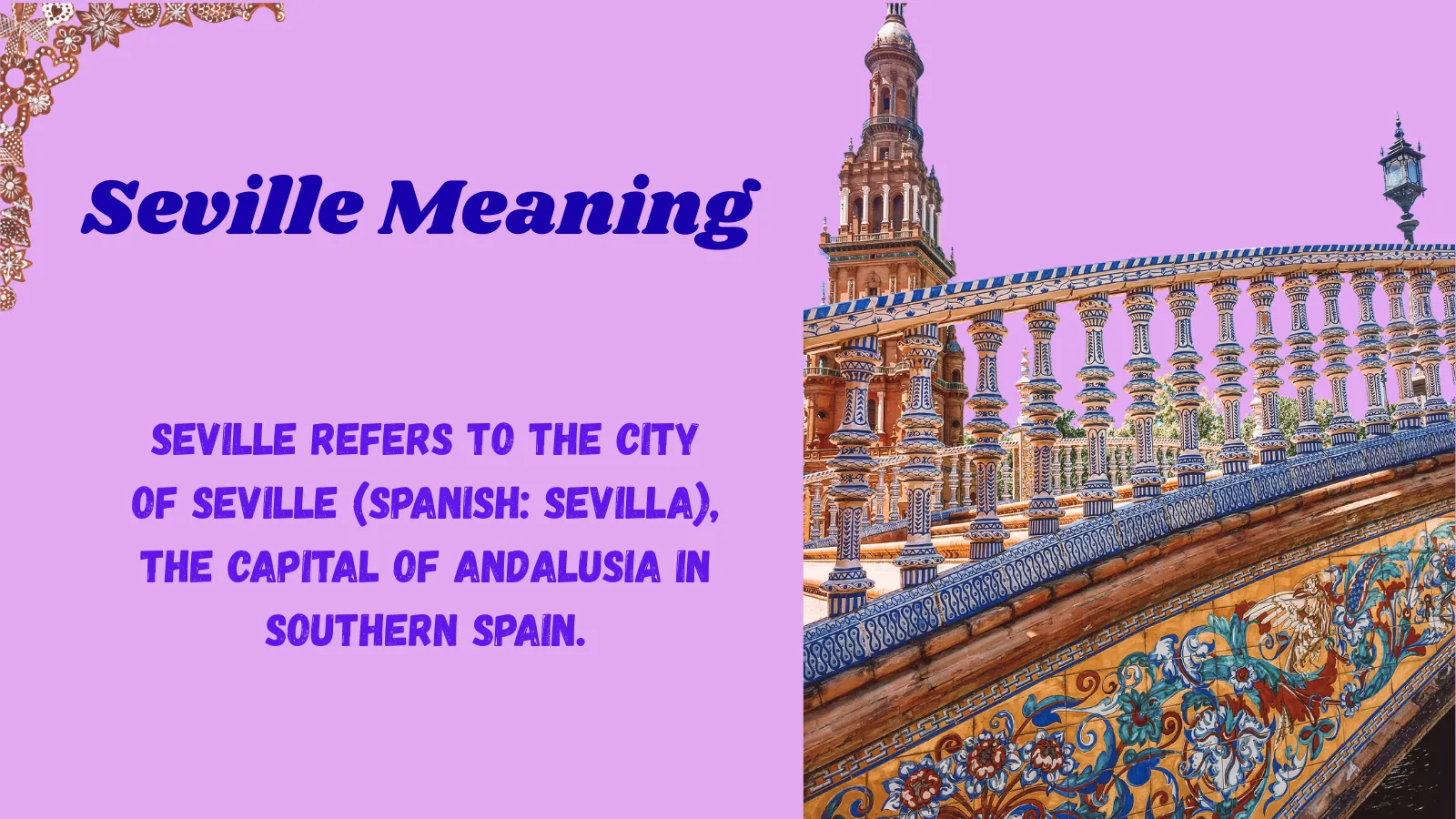

Seville meaning goes far beyond a name—it carries layers of history, culture, and beauty. Seville is the capital city of Andalusia, Spain, known for its vibrant flamenco music, Moorish architecture, and warm Mediterranean soul. The name “Seville” itself reflects centuries of transformation—from Roman times to Arabic influences—shaping it into one of the most captivating cities in Europe.
In modern language, Seville can refer to both the city itself and the spirit it represents—a mix of passion, tradition, and elegance. From its ancient origins as Hispalis to its golden age under Moorish rule, Seville embodies a deep cultural identity that still thrives today.
In this article, we’ll uncover the true meaning of Seville, explore its linguistic roots, understand how it’s used in different contexts, and discover why this city’s name has become a symbol of art, romance, and history worldwide.
What Does “Seville” Mean?
Seville refers to the city of Seville (Spanish: Sevilla), the capital of Andalusia in southern Spain.
It’s often described as a city of light, rhythm, and heritage, representing the artistic and cultural essence of Spain.
Etymology:
The name Seville originates from the Latin word “Hispalis”, which evolved into the Arabic “Ishbiliya” during Muslim rule, and later transformed into Sevilla in Spanish. The English name Seville derives from that Spanish version.
Example Sentences:
- “I’ve always dreamed of visiting Seville during the spring festivals.”
- “Her dance had the fire and grace of Seville itself.”
Key Points to Remember:
- Seville means the city of Sevilla, Spain’s cultural heart.
- The name reflects Roman, Arabic, and Spanish influences.
- Symbolizes beauty, warmth, and artistic tradition.
Background & History of the Name “Seville”
The name Seville has evolved through thousands of years of linguistic and cultural change.
How it began:
- Originated as Hispalis, a Roman colony founded near the Guadalquivir River.
- Became Ishbiliya under the Moors in the 8th century, when Arabic culture flourished.
How it evolved:
- The Castilians recaptured it in 1248, transforming Ishbiliya into Sevilla.
- English speakers later adapted the name to Seville.
Fun Fact:
The English pronunciation “Seh-VIL” differs from the Spanish “Se-vee-ya,” highlighting how languages reshape names over centuries.
Cultural and Symbolic Meaning
Beyond its geography, Seville meaning symbolizes:
- Passion – reflected in flamenco and festivals.
- Artistry – seen in its architecture and music.
- Tradition – rooted in centuries of cultural blending.
Seville is often used poetically to describe elegance or charm, much like “Paris” represents romance.
Example:
“Her voice had the warmth of Seville’s sunset.”
Here, Seville is used metaphorically to evoke beauty and emotion.
Usage in Various Contexts
1. Travel & Culture
“We spent a week exploring Seville’s old quarters and tasting tapas.”
Here, it directly refers to the city—a top European travel destination.
2. Art & Literature
“Painters of Seville” often describes Spanish artists inspired by Andalusian light and color.
Writers use Seville as a symbol of creative spirit.
3. Music & Performance
“The Barber of Seville” (opera by Rossini) made the city’s name world-famous, symbolizing charm, wit, and musical brilliance.
Common Misconceptions About Seville
1. Seville is only a tourist city.
❌ Truth: It’s also a university and cultural hub with deep local traditions.
2. Seville means “sun” or “orange.”
❌ Truth: While known for its oranges, “Seville” itself does not mean “orange.”
3. Seville is pronounced ‘Seh-Vee-lay’.
❌ Truth: Correct pronunciation is “Seh-VIL” in English or “Se-vee-ya” in Spanish.
Similar Names & Linguistic Relatives
| Term | Origin | Meaning / Connection |
|---|---|---|
| Sevilla | Spanish | Native name of the city |
| Ishbiliya | Arabic | Historical Moorish name |
| Hispalis | Latin | Roman name for early settlement |
Example:
“The roots of Seville trace back to Hispalis, once a thriving Roman city.”
Symbolism in Literature and Media
Writers often use Seville as a metaphor for:
- Romance – “A Seville night” suggests intimacy and allure.
- Energy – “A dance from Seville” evokes passion and rhythm.
- Heritage – “The bells of Seville” symbolize history and pride.
Pop culture—from operas to films—uses Seville to represent the soul of Spain.
Regional & Global Influence
- Spain: Seville stands as Andalusia’s capital and a cradle of flamenco.
- Europe: Represents southern charm and Moorish legacy.
- Worldwide: The name “Seville” is used in brands, perfumes, and art to evoke warmth and elegance.
Example:
“Seville Orange” — a bitter citrus used in marmalade, named after the region.
FAQs
1. What does Seville mean?
It’s the English name for Sevilla, the capital of Andalusia, Spain.
2. Where did the name come from?
From the Latin Hispalis, later Ishbiliya (Arabic), and then Sevilla (Spanish).
3. Is Seville a name for people?
Rarely, but it can be used as a poetic or artistic given name.
4. How is Seville pronounced?
English: Seh-VIL
Spanish: Se-vee-ya
5. What is Seville famous for?
Flamenco, oranges, festivals, Gothic architecture, and deep cultural heritage.
Conclusion
The meaning of Seville reaches beyond geography—it’s a symbol of heritage, warmth, and artistry. From Roman foundations to Moorish influence and Spanish brilliance, Seville stands as a living tapestry of history. Whether spoken in poetry, travel, or music, its name carries an eternal rhythm that connects the past with the present.
So when you hear “Seville,” think not just of a place, but of a feeling—a timeless blend of passion, beauty, and soul.
