


Ever come across the word “benign” and wondered what it actually means? You’re not alone! It’s a word that pops up in medical reports, social media posts, and even daily conversations — yet, many people still find it confusing.
The term benign is often used when describing something not harmful, gentle, or safe. You might see it in a doctor’s note (“The tumor is benign”) or in a chat (“Don’t worry, his joke was benign”).
Understanding this word helps you sound smarter, clearer, and more confident when communicating — whether you’re in a professional setting, texting your friends, or reading the news.
In this post, we’ll explain what “benign” really means, where it comes from, how it’s used in different contexts, and how to respond when you see it.
Definition & Meaning
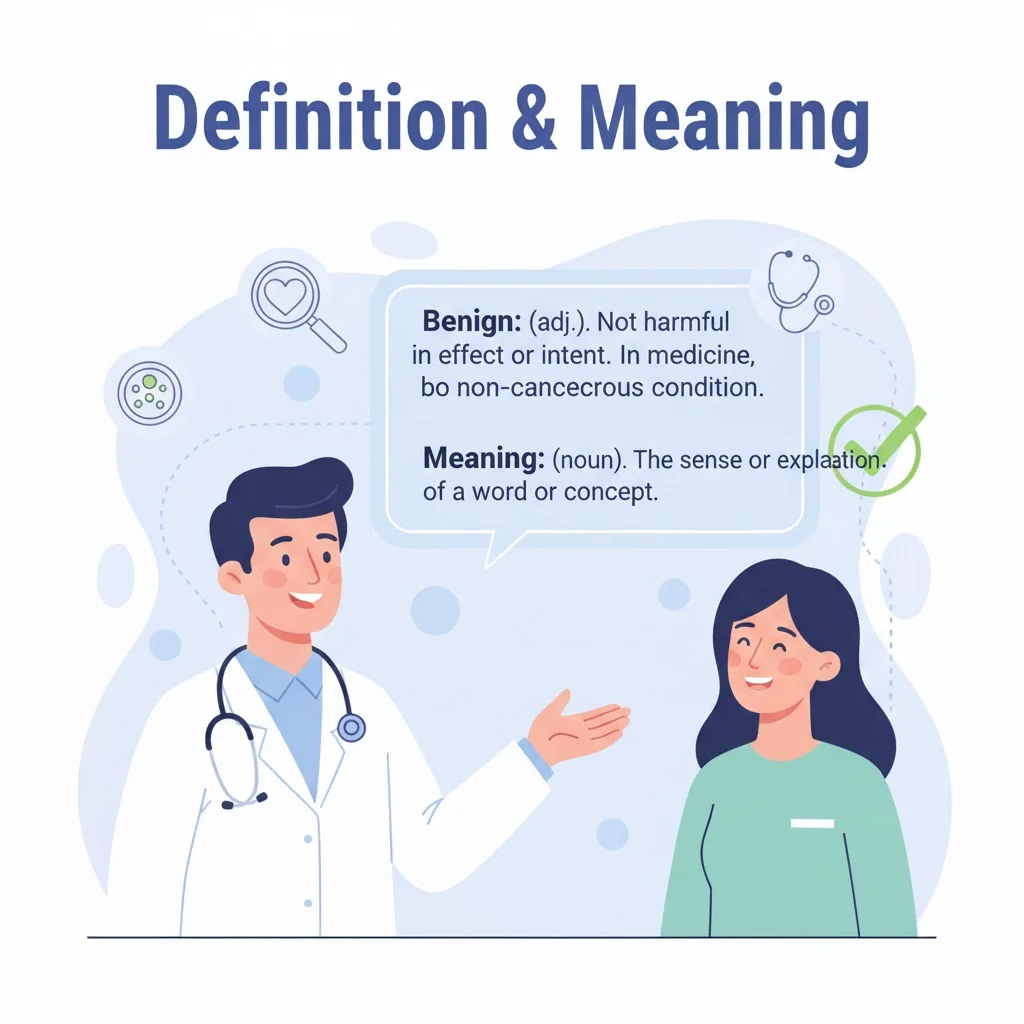
The word “benign” means kind, gentle, or harmless. It’s often used to describe a condition, behavior, or situation that poses no danger or threat.
In simple terms:
Benign = Safe or not harmful.
For example:
- In medicine, a benign tumor is not cancerous. It may grow slowly and won’t spread to other parts of the body.
- In daily life, if someone says, “His comment was benign,” they mean it wasn’t offensive or hurtful.
Example in dialogue:
Aisha: “The doctor said my mole is benign. Should I be worried?”
Sara: “Nope! That means it’s harmless — nothing to stress about.”
So, whether you’re reading a medical report or chatting online, the core idea of benign stays the same — something mild and not dangerous.
Background & History

The word “benign” comes from the Latin term benignus, meaning “kind” or “well-born.”
- “Bene” = good
- “Genus” = born or origin
Over centuries, the meaning shifted slightly. In Middle English, it described a person who was gentle or kind-hearted. Later, it entered the medical world, describing non-cancerous growths or conditions.
Today, “benign” carries both meanings — kind (in personality) and harmless (in health or behavior).
Fun fact: The opposite of benign is malignant, which means harmful or dangerous — especially in medical terms.
Usage in Various Contexts
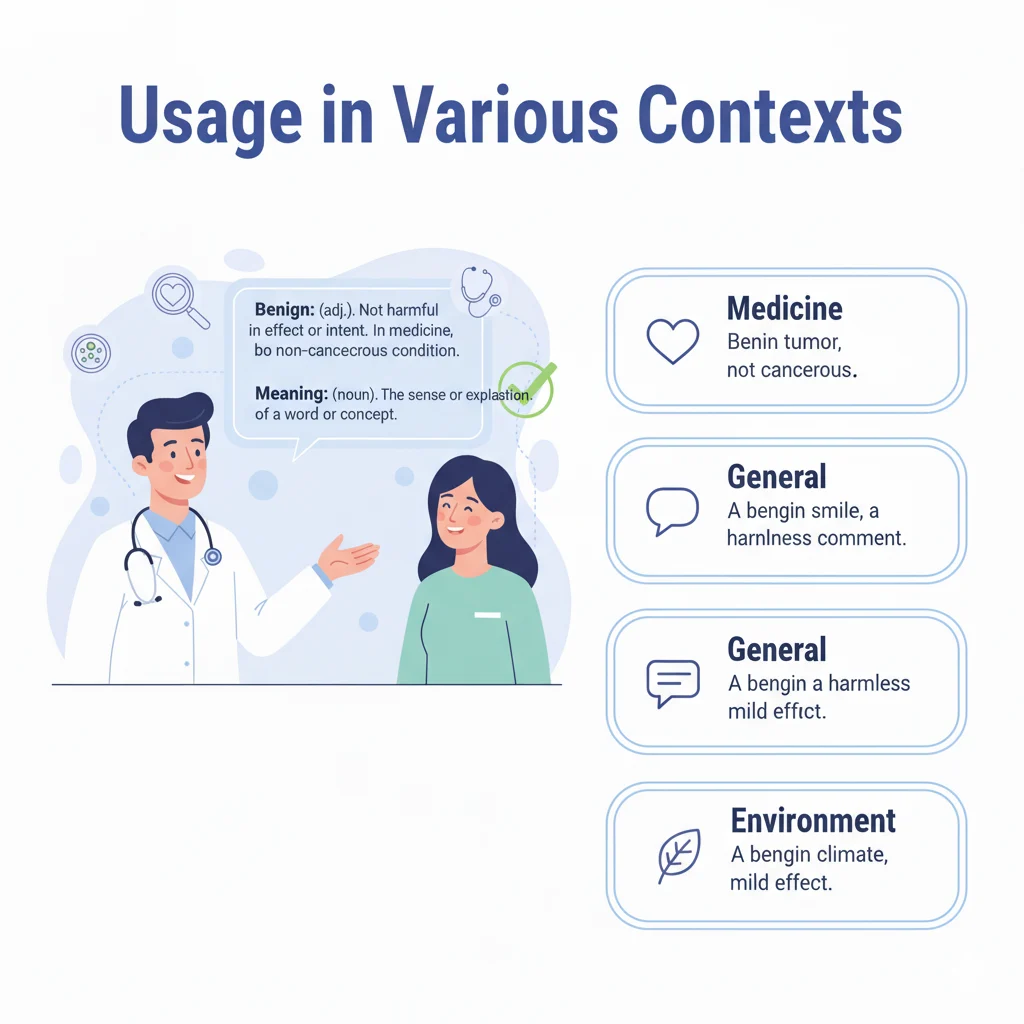
Let’s see how “benign” appears in different settings:
1. In Medical Contexts:
- “The lump is benign, not cancerous.”
- “Benign conditions don’t spread like malignant ones.”
2. In Everyday Talk:
- “Her smile was benign — calm and kind.”
- “It was a benign misunderstanding.”
3. On Social Media or Gaming:
Sometimes people use it to say something harmless or chill.
Jake: “Bro, I only said it as a joke!”
Leo: “Cool, it was benign then — no harm done.”
4. At Work or School:
- “The email tone was benign, not rude.”
- “His feedback sounded harsh but was actually benign.”
In every situation, “benign” means no harm intended or done.
Common Misconceptions & Clarifications
Many people think benign always relates to medical terms, but that’s not true!
Misconception #1: “Benign = medical only.”
✅ Correction: It can describe behavior, weather, or tone, too.
“The weather was benign — warm and pleasant.”
Misconception #2: “Benign means good.”
✅ Correction: Not exactly. It means not harmful, not necessarily good.
Misconception #3: “Benign can’t be used in casual chat.”
✅ Correction: Totally fine! It’s just a formal word that means harmless.
So, don’t shy away from using “benign” in texts or captions — just make sure it fits the tone.
Similar Terms & Alternatives
Here are some alternatives to “benign” depending on your tone and context:
| Context | Similar Word | Meaning |
|---|---|---|
| Medical | Non-cancerous | No spread or harm |
| Behavior | Gentle | Kind and calm |
| Mood/Intent | Harmless | Without bad effect |
| Personality | Kind-hearted | Caring, warm |
| General | Innocuous | Not offensive |
You can also say:
- “It was a mild reaction.”
- “Her comment was inoffensive.”
- “The situation was harmless.”
How to Respond to This Term
If someone tells you something is benign, here’s how you can respond:
Casual Response:
“Oh, that’s good to hear!”
“Cool, so nothing serious.”
Funny Response:
“Benign? Sounds like something from a superhero movie!”
Professional Response:
“Thank you for clarifying that it’s benign.”
“Glad to hear there’s no risk involved.”
Privacy-Conscious Response:
“Thanks for sharing. I hope everything stays fine.”
Your tone should match the topic — medical = serious, chat = light and friendly.
Regional or Cultural Differences
“Benign” is mostly used in English-speaking countries like the US, UK, Canada, and Australia.
However, in non-native English regions, people might prefer simpler terms like harmless or safe.
In medical translations, “benign” often stays the same word, since it’s a technical term.
For example:
- In Spanish: benigno
- In French: bénin
- In Italian: benigno
So yes, it’s globally understood — especially in medical or academic settings.
Comparison with Similar Terms
| Term | Meaning | Used For | Tone |
|---|---|---|---|
| Benign | Harmless, kind | Health, personality | Neutral |
| Harmless | No danger | Casual talk | Informal |
| Innocuous | Not offensive | Professional | Formal |
| Gentle | Kind, soft | Personal behavior | Warm |
| Mild | Not strong | Reactions or weather | Neutral |
When writing or speaking, pick the one that fits your tone and audience.
Usage in Online Communities & Dating Apps
Yes — people even use “benign” on social media or dating apps!
Example on Tinder:
“Looking for a benign kind of love — drama-free and calm.”
On Twitter or Reddit:
“That meme was benign — just fun, not offensive.”
In gaming chats:
“Chill, dude, it was a benign comment.”
These examples show how people use it to defuse tension or show positive intent.
Pro tip: When unsure, ask politely —
“Hey, when you said that was benign, you mean harmless, right?”
Hidden or Offensive Meanings
Good news — benign doesn’t have any hidden or offensive meanings.
But context still matters. Saying “benign” in a joking tone after someone’s worried could sound insensitive.
✅ Use it with empathy.
❌ Don’t use it to dismiss someone’s fear.
Example:
Wrong: “Relax, it’s benign, stop worrying.”
Right: “It’s benign — I’m really happy for you, that’s great news!”
Tone is everything.
Suitability for Professional Communication
In professional settings, “benign” is completely appropriate, especially in reports, emails, or medical contexts.
Examples:
- “The results show a benign condition.”
- “The client’s feedback was benign and constructive.”
If you want simpler alternatives, try:
- “It’s not serious.”
- “It’s mild.”
- “It’s safe.”
These work better for casual audiences or customers.
FAQs
Q1. What does benign mean in simple terms?
A: It means harmless or not dangerous.
Q2. What is the opposite of benign?
A: The opposite is malignant, which means harmful or dangerous.
Q3. Can I use benign in daily conversation?
A: Yes! It works perfectly in casual and professional chats.
Q4. Is benign always a medical word?
A: No, it also means kind or gentle in behavior.
Q5. Does benign have any bad meanings?
A: Not really, but tone and context matter.
Conclusion
To wrap it up, “benign” means something that’s safe, gentle, or harmless. It started as a word describing kindness, later became key in medicine, and now shows up everywhere — from doctor’s reports to DMs.
It’s a positive word, often used to ease worries or describe peaceful situations. Knowing what it means helps you communicate better — whether you’re online, at work, or chatting with friends.
Next time you see or hear “benign,” you’ll know: it simply means nothing to fear.
