


“Selah” means to pause, reflect, or stop and think, especially when reading biblical passages like Psalms. That’s why most people search what does selah mean, what does selah mean in the Bible, what does the Hebrew word selah mean, or what does selah mean in Psalms.
But there’s more behind this mysterious word. “Selah” appears around 74 times in the Bible—mostly in the Book of Psalms—and its deep, layered meaning often creates curiosity.
Many wonder If it’s a musical term, a spiritual command, or simply a textual marker. Others look for meanings like what does the name Selah mean, what does Selah mean in Arabic, or whether “Selah” carries significance in modern chat, WhatsApp, Instagram, TikTok, or even niche fields such as physics and aviation.
This article explains everything in a simple, natural, human-friendly tone with a strong hook to keep you reading.
Meaning & Definition
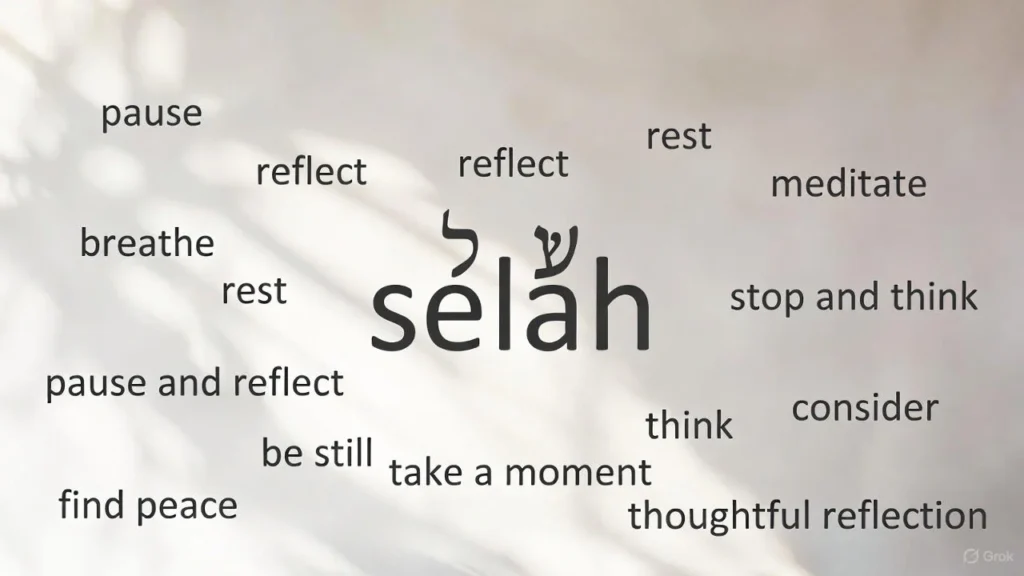
“Selah” is a Hebrew word often translated as pause, reflect, rest, or stop and consider. When readers search what does the word Selah mean or what does the Hebrew word Selah mean, they usually expect a single definition — but in reality, it carries several shades of meaning.
Core Hebrew Meaning
In Hebrew, “Selah” (סֶלָה) is tied to the concept of rising up, lifting, or creating emphasis. It signals the reader or singer to slow down and reflect on the message. It is not spoken aloud during prayer; it’s more like a scriptural symbol that guides interpretation.
Biblical Meaning
When people search what does Selah mean in the Bible, what does Selah mean in the Bible KJV, or in the Bible what does Selah mean, they discover that scholars widely interpret it as:
- A pause for meditation
- A moment to emphasize the previous verse
- A musical rest used by temple singers
- A call to reflect spiritually
Meaning in Psalms
Most occurrences appear in Psalms, which is why what does Selah mean in Psalms and what does Selah mean in the Psalms are common queries. In Psalms, “Selah” likely functioned as a liturgical direction–like telling worshippers: Stop. Think. Absorb this truth.
In summary, the word “Selah” quietly instructs the reader: Reflect deeper; don’t rush.
Background

To understand “Selah,” we need to step into the world of ancient Hebrew poetry and worship music.
Historical Use
“Selah” was used during temple worship in ancient Israel. Singers, musicians, and readers treated it as a musical or contemplative break. That’s why linguists believe it served as:
- A cue for instrumental interlude
- A breathing space during chanting
- A moment of reverent silence
Etymology
The root of “Selah” may come from:
- סָלָה (salah) — to lift or exalt
- סֶלָה (selah) — a musical mark
- סֶלֶה (seleh) — pause or measure
Cultural Impact
Because the Bible remains highly influential worldwide, “Selah” still appears in modern songs, poetry, literature, and even online messages. It creates a sense of peace, reflection, and emphasis.
Name Meaning
Many wonder what does the name Selah mean. As a name, Selah usually means:
- “Pause and reflect”
- “Amen” (symbolically)
- “Calm” or “rest”
- “Praise” or “uplifted”
It is used for both children, but more commonly for girls.
Usage in Different Context

“Selah” has evolved beyond Scripture. Today, people use it in various modern contexts:
1. Chat & Social Media (WhatsApp, Instagram, TikTok)
Search phrases like what does Selah mean in chat or Selah meaning in WhatsApp or Instagram usually refer to its modern interpretation.
In chat, “Selah” can mean:
- “Think about it.”
- “Let that sink in.”
- “Pause and reflect.”
- “Deep point made.”
- “I’m done speaking.”
Creators on TikTok sometimes add “Selah” for dramatic or poetic effect — especially after sharing something emotional or philosophical.
2. Professional Fields
Physics
In physics, “Selah” is not an official scientific term. When used, it’s metaphorical—meaning pause to reconsider the statement or theory.
Medical Field
In medical settings, “Selah” isn’t standard terminology either. But writers or speakers may use it rhetorically to emphasize an important point in a health discussion.
Aviation / Aircraft Terminology
Again, “Selah” has no technical meaning in aircraft terminology. It may appear in pilot blogs, religious aviation groups, or motivational messages to indicate pause and reflect.
3. Religious and Spiritual Conversations
People still use “Selah” to slow down a discussion, especially about faith, life, and emotions.
Common Misconceptions
Because “Selah” is mysterious, many misunderstand it. Here are the most common myths:
❌ Myth 1: Selah means “Amen.”
Not exactly. “Amen” confirms or agrees; “Selah” instructs the reader to pause.
❌ Myth 2: Selah is only a musical term.
True, it has musical roots, but its meaning is deeper and more reflective.
❌ Myth 3: Selah appears only in Psalms.
It also appears in the Book of Habakkuk.
❌ Myth 4: Selah is spoken aloud during prayer.
No — it was written as a reading or singing direction, not spoken.
❌ Myth 5: Selah has a fixed translation.
Hebrew scholars agree it carries multiple layers, not a single literal definition.
Similar Terms & Alternatives
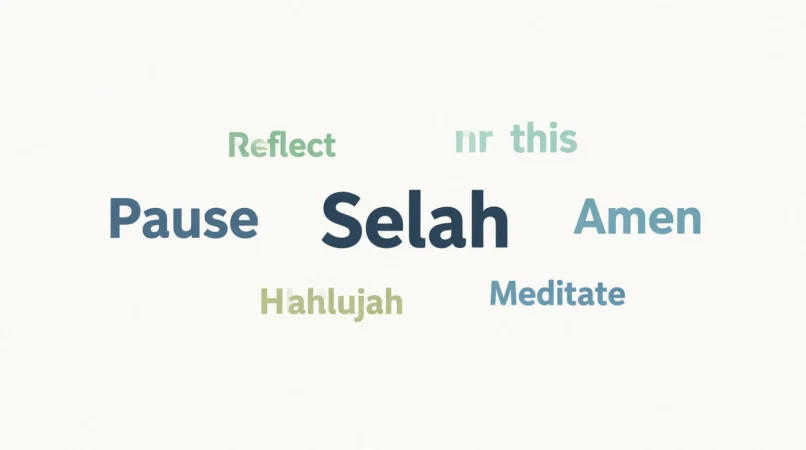
If you wish to express something like “Selah” in modern English, you can use:
- “Pause.”
- “Reflect on this.”
- “Let that sink in.”
- “Think about it.”
- “Stop and consider.”
- “Meditate on this.”
- “Break” (musically)
In spiritual or poetic writing:
- “Amen”
- “Hallelujah”
- “Sabbath” (symbolizes rest)
In chat or texting:
- “ FR”
- “Real talk”
- “Lowkey think about it”
These alternatives help modern audiences understand the mood or tone behind “Selah.”
How to Respond to it
When someone uses “Selah” after a message, they’re inviting reflection. You can respond in several ways depending on tone:
If they want reflection:
- “True, I agree.”
- “That really hits deep.”
- “Makes sense, thanks for sharing.”
If they shared something emotional:
- “I understand.”
- “I’m here for you.”
- “That’s meaningful.”
If used poetically:
- “Beautifully said.”
- “Feels profound.”
If you want to continue the mood:
- “Another thought…”
- “Let’s think about this more.”
Differences from Similar Words
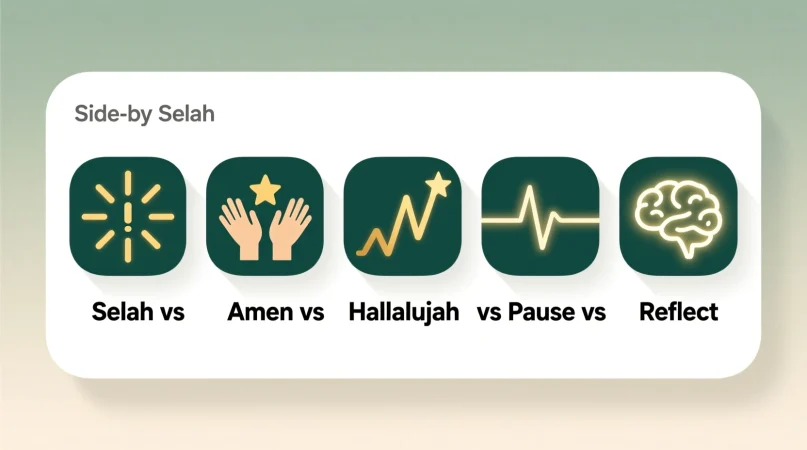
Here’s how “Selah” differs from other commonly compared words:
Selah vs Amen
- Selah = pause and reflect
- Amen = agreement or closure
Selah vs Hallelujah
- Selah = reflective pause
- Hallelujah = praise and joy
Selah vs Pause
- Selah = spiritual/musical pause
- Pause = general stop
Selah vs Reflect
- Selah = instruction to reflect
- Reflect = actual act of thinking
Selah vs Sabbath
- Selah = moment of reflection
- Sabbath = full day of rest
These distinctions help readers understand why “Selah” is unique.
Relevance in Online Conversations & Dating Apps
Surprisingly, “Selah” is gaining traction across online conversations, especially among people who enjoy deep, meaningful talk.
Why it’s used online
- It sets a thoughtful tone.
- It slows down a fast conversation.
- It signals emotional depth.
On dating apps
People use “Selah” to end a deep message, quote, or philosophical line. It can signal:
- Emotional maturity
- Spirituality
- Poetic or artistic personality
It may also be used to impress or show seriousness in a conversation.
Conclusion
“Selah” may seem like a small, mysterious word, but it carries centuries of history, reflection, poetry, and emotion.
If you search what does Selah mean in the Bible, what does Selah mean in Psalms, or even its modern usage on Instagram or TikTok, the core idea remains the same: pause and reflect.
Its Hebrew roots, biblical presence, spiritual impact, and growing use in modern chat all make it a timeless word with unique emotional power. It invites us to slow down, think deeply, and appreciate meaning — something we all need in today’s fast-paced world.
So whether it appears in Scripture, a song, a text message, or a dating app conversation, “Selah” still whispers the same message:
Take a moment. Breathe. Reflect.
