
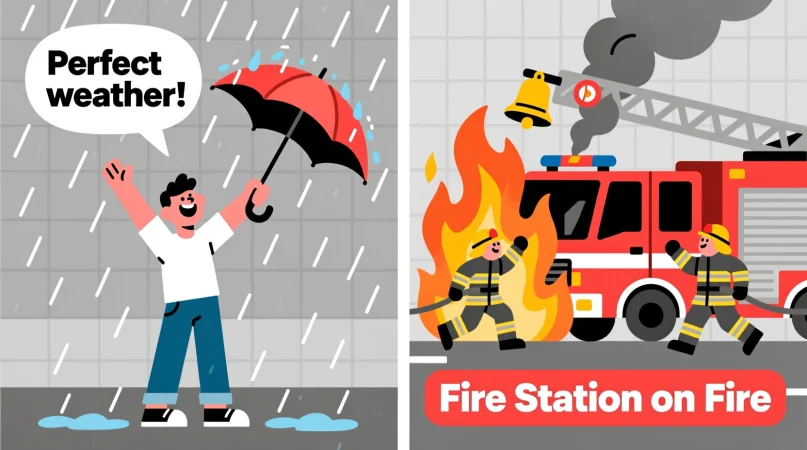

Irony is a way of expressing something by highlighting the opposite of what is meant, or when reality turns out differently from what is expected.
People often wonder about this concept, especially in literature, movies, and everyday conversations. Many confuse it with sarcasm, coincidence, or bad luck, which can lead to misunderstandings. It appears in stories, films, memes, and casual talk, often adding humor, tension, or emotional depth.
This guide explains the three main types — verbal, situational, and dramatic — along with their origins, practical examples, common misconceptions, and synonyms. It also answers frequently asked questions about how irony works in language and storytelling.
By the end, you’ll confidently recognize and understand irony in daily life, literature, and pop culture.
Definitions & Meaning
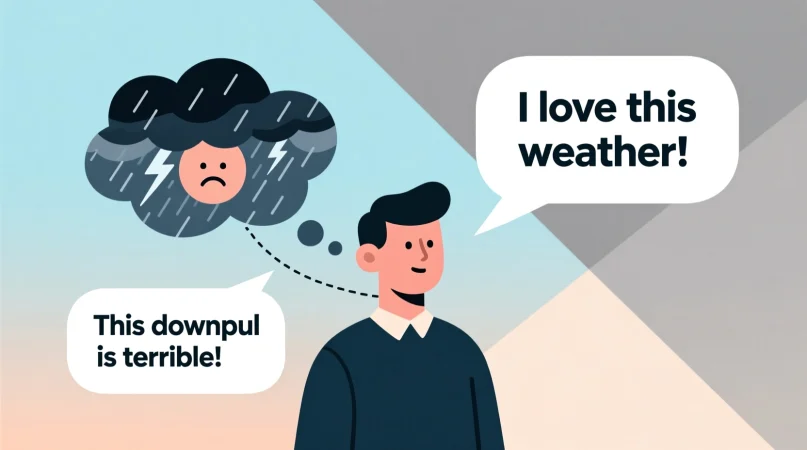
Irony is a communication technique where there is a contrast between what is said and what is meant, or between expectation and outcome. It helps convey humor, criticism, or deeper meaning.
Main Types of Irony
- Verbal Irony – Saying something while meaning the opposite.
Example: Saying “What wonderful weather!” during a thunderstorm. - Situational Irony – When events turn out contrary to expectations.
Example: A fire station burns down. - Dramatic Irony – When the audience knows something characters do not.
Example: In a suspense movie, viewers know the villain’s plan while the protagonist remains unaware.
Irony can be subtle, witty, or emotionally powerful. It appears in casual conversation, literature, and digital media, making it a versatile tool for communication and storytelling. Understanding it helps you interpret jokes, stories, and commentary more accurately.
Origins & History
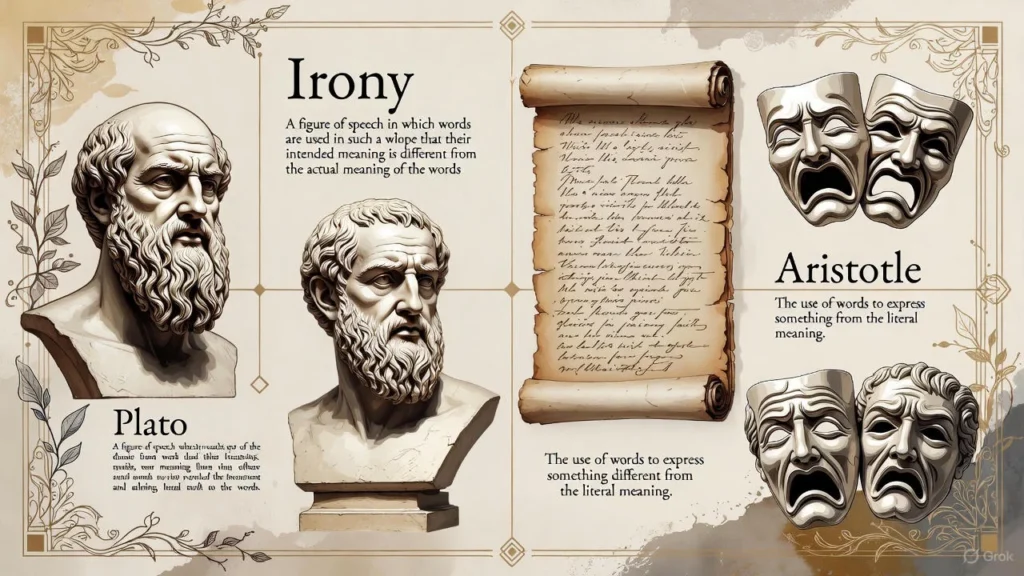
The term “irony” comes from the Greek word eirōneía, meaning pretended ignorance. Ancient Greek philosophers, especially Socrates, used this approach to expose truth by asking questions that suggested less knowledge than they possessed — now known as Socratic irony.
In literature, irony has been central for centuries. Greek tragedies relied on dramatic irony to build tension. Shakespeare often used irony to reveal character intentions or create humor, as in Othello and Romeo and Juliet.
During the 18th and 19th centuries, satirical writers like Jonathan Swift and Jane Austen used irony to critique society subtly. This made irony both a literary and cultural tool for social commentary.
Today, irony extends beyond literature into films, social media, memes, and everyday speech. Its core purpose remains the same: highlighting contrast, surprising the audience, and deepening understanding.
Usage in Different Contexts
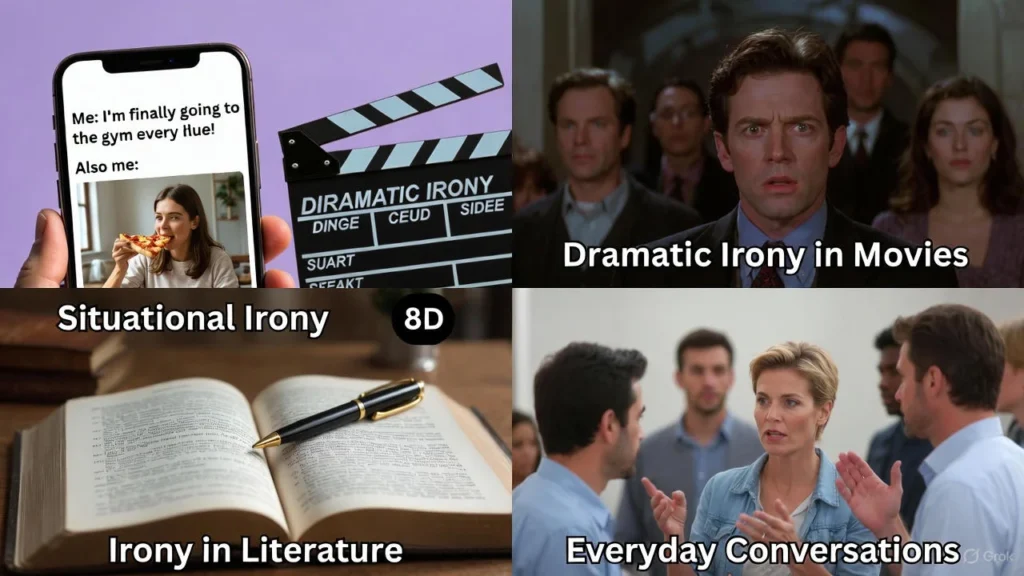
Social Media & Online Communication
Irony is everywhere online. Memes, sarcastic tweets, and captions often use subtle contrasts to make a point or evoke humor.
Example: Posting “Fantastic day!” after a series of unfortunate events.
Academic & Literary Use
Students frequently encounter irony in literature. Understanding verbal, situational, and dramatic irony is crucial for analyzing themes, characters, and plot twists. Teachers often highlight irony to help students think critically.
Movies, TV, and Pop Culture
Dramatic irony drives suspense and emotional engagement. Viewers know key details before characters do, making storytelling more compelling.
Everyday Conversations
Verbal irony appears in everyday comments, often mistaken for sarcasm.
Example: Complimenting someone’s “perfect timing” after they arrive late.
Storytelling & Creative Writing
Writers use irony to surprise readers, emphasize themes, or create humor. It makes narratives layered and memorable.
Common Misunderstandings & Clarifications
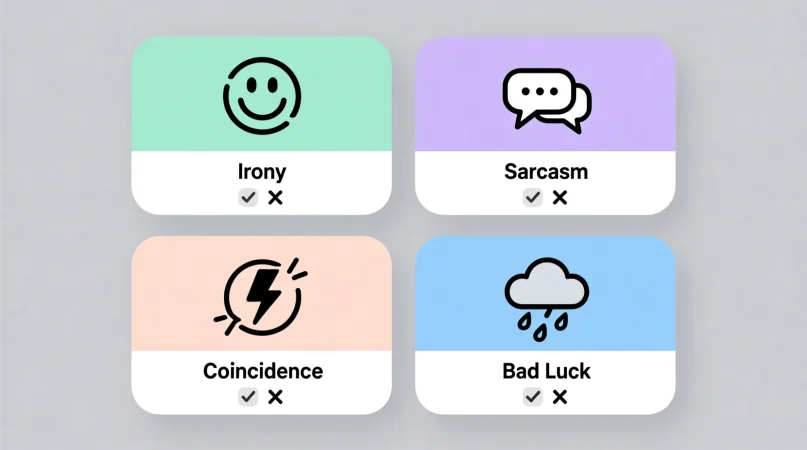
- Irony is not sarcasm.
Sarcasm is a sharp, mocking form of verbal irony, but irony itself can be subtle, humorous, or serious. - Irony is not coincidence.
Random events or coincidences are not ironic unless they involve a contrast or unexpected outcome. - Irony is not just bad luck.
Losing your keys is unfortunate, but it is not ironic unless it involves a surprising contrast. - Irony is not always funny.
Dramatic irony can create suspense, sadness, or tension, not just humor. - Contrast is essential.
Without contrast between expectation and reality, or between literal and intended meaning, there is no irony.
Alternatives & Synonyms
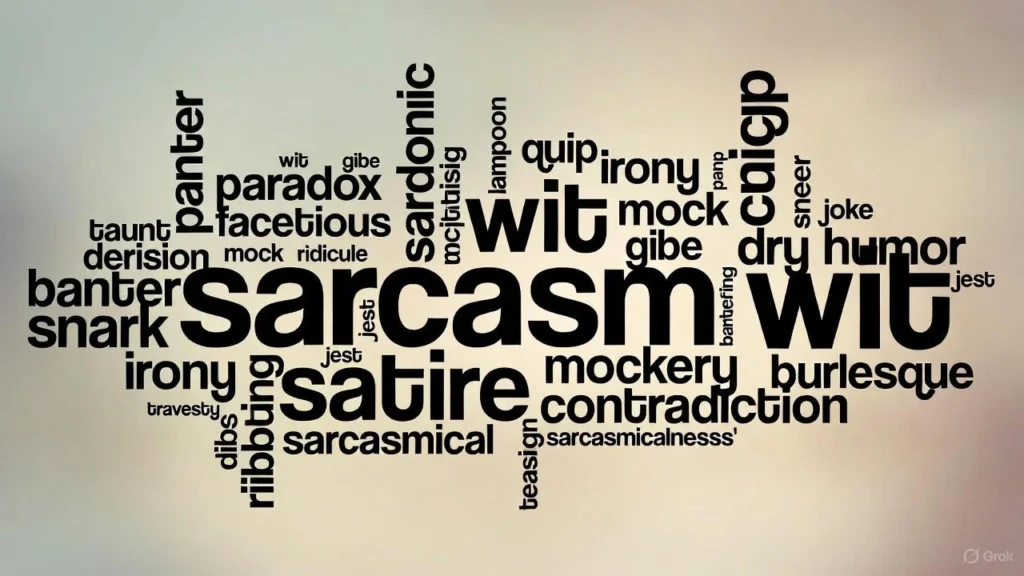
Some related terms that can replace or complement irony include:
- Sarcasm – mocking verbal irony
- Satire – humor with a critical purpose
- Wit – clever use of language
- Paradox – seemingly contradictory statement
- Contradiction – opposition between ideas
- Mockery – playful or critical ridicule
Using these terms helps explain irony without excessive repetition and supports natural readability for search engines.
(FAQ)
- What is verbal irony?
Saying one thing but meaning another. - What is situational irony?
When events turn out contrary to expectations. - What is dramatic irony?
When the audience knows more than characters in a story or film. - Is irony the same as sarcasm?
No. Sarcasm is a type of verbal irony with a mocking tone. - How is irony used in literature?
To create contrast, suspense, humor, or deeper meaning. - What does irony mean in figurative language?
A figure of speech where literal and intended meanings differ. - Can irony appear in everyday conversation?
Yes, often subtly, as humor or criticism.
Conclusion
Irony is a versatile and powerful communication device. If in literature, film, memes, or daily conversation, it enriches storytelling and makes messages more engaging. Understanding verbal, situational, and dramatic irony allows you to recognize subtle humor, tension, or criticism, enhancing your reading, writing, and communication skills.
By mastering irony, you can interpret stories more deeply, appreciate creative writing, and even improve social interactions. This guide provides clear definitions, historical context, practical examples, and answers common questions, helping you fully grasp the concept without confusion.
Irony is more than just a word — it is a lens through which reality, expectation, and human expression intersect. Recognizing it adds depth to understanding literature, media, and everyday language, making you a sharper reader, listener, and communicator.
